

From Global Flavors to Family Tables: UIBE Co-organizes a Hongqiao Forum Session on How High-standard Opening-up Improves Everyday Life
On November 5, the session “High-standard Opening-up for Better Lives: Global Flavors on Chinese Tables” was held in Shanghai as part of the Ninth Hongqiao International Economic Forum. Hosted by the Ministry of Commerce and co-organized by China Media Group’s Agriculture and Rural Affairs Programming Center and UIBE, it brought together nearly 300 government representatives, international organization leaders, agri-food executives, and scholars.
Featuring keynote speeches, presentations of practical experience, and a roundtable, the session explored trends in agri-food imports, trade facilitation, supply-chain integration, and food-system resilience. It offered Chinese and international agri-food stakeholders a platform for dialogue and cooperation.
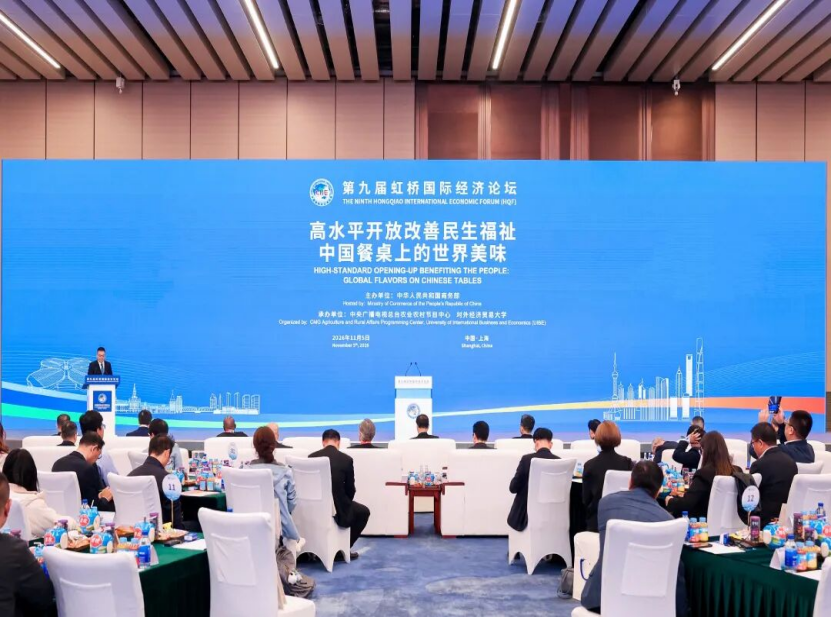
In his remarks, UIBE President Prof. Wu Weixing said that opening-up is most clearly visible on ordinary people’s dining tables: products considered rare little more than a decade ago can now be found in everyday supermarkets. China has become the world’s largest importer of agricultural products, bringing flavors from across the world into millions of homes. These are tangible improvements in people’s lives resulting from high-standard opening-up. Competition from imports also encourages domestic producers to improve quality and build brands. Opening-up and people’s well-being, he noted, come together at the dining table.
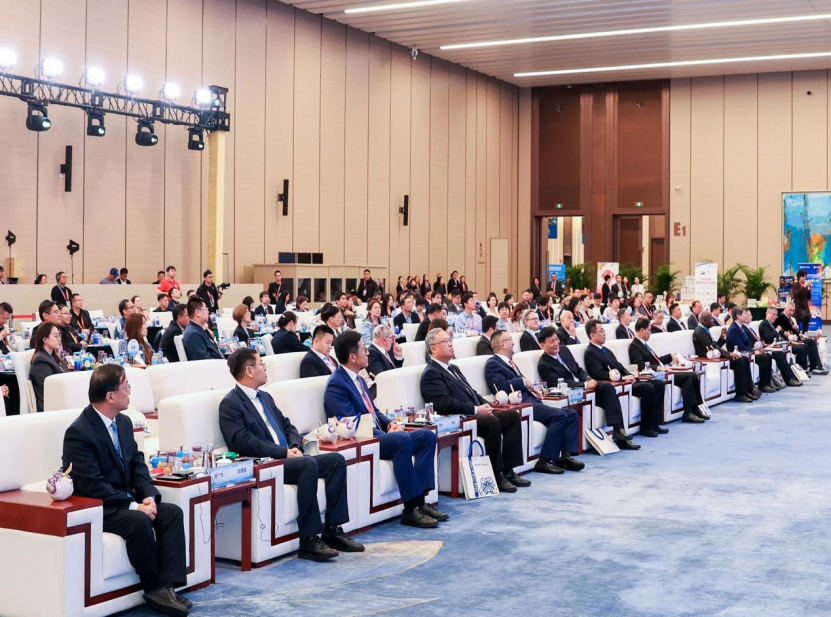
In the keynote session, Yi Xiaozhun, former Vice Minister of Commerce and former WTO Deputy Director-General, drew on his own experience to describe how China’s opening-up has changed people’s diets. During China’s WTO accession negotiations, he advocated lower tariffs on avocados, helping turn a once-luxury product into an everyday food. The China–Chile Free Trade Agreement, meanwhile, has helped direct 90 percent of Chile’s cherry exports to China and generates around 200,000 jobs a year locally.
Wang Lingjun, President of the China Customs Society, explained that smart customs systems allow fresh and perishable products to clear ports quickly and reach the market sooner while maintaining food safety. Customs authorities are also introducing automatic registration renewals for overseas producers of imported food and supporting direct inland delivery of fresh imports in their original cartons and containers. He emphasized that food safety and border biosecurity remain firm priorities: effective controls and faster clearance should work together to maximize trade facilitation.
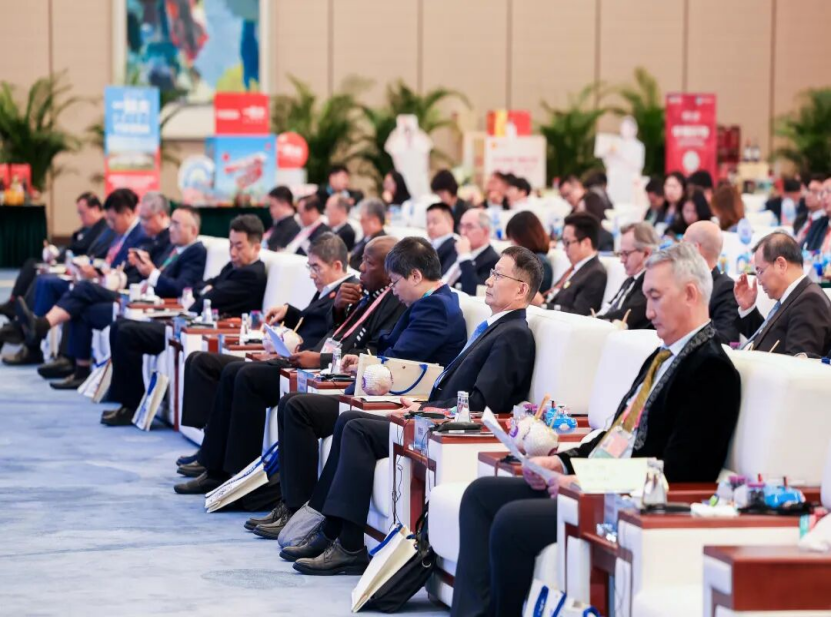
Chen Gang, a member of COFCO Group’s Party Leadership Group and Vice President, said that COFCO, a leading national agri-food enterprise and a major organizer of global agricultural supply chains, had participated in eight consecutive China International Import Expos. Through long-term partnerships and diversified sourcing, the Group secures bulk grain imports while bringing distinctive foods from around the world to China, helping consumers move from having enough to eat to eating well and healthily.
Yu Jingquan, an academician of the Chinese Academy of Engineering and Head of Zhejiang University’s Faculty of Agriculture, Life and Environmental Sciences, noted that China’s fruit and vegetable consumption has shifted from meeting basic needs to seeking better quality. For international suppliers to reach the Chinese market, however, they must address three key requirements: varieties, harvesting, and grading. He called for closer Chinese–international cooperation in breeding, quality control, cold chains, and related areas.
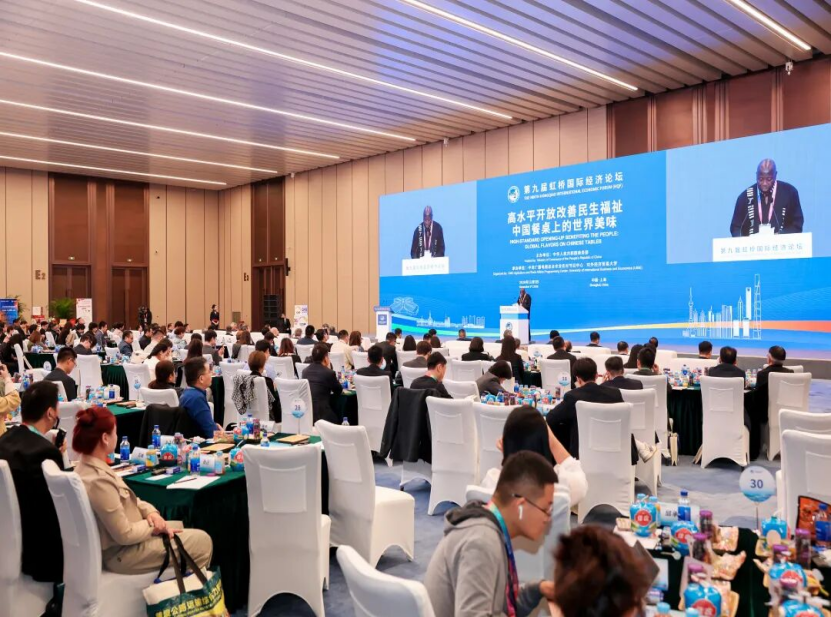
Felix Dapare Dakora, Senior Adviser to the National Nanfan Research Institute of the Chinese Academy of Agricultural Sciences, Fellow and former President of the African Academy of Sciences, and recipient of the Chinese Government Friendship Award, highlighted agricultural science and technology cooperation between China and Africa. He expressed interest in using the Hainan Free Trade Port and Nanfan research platforms to deepen cooperation in biological breeding, smart agriculture, and tropical agriculture, bringing more high-quality African agri-food products to Chinese consumers.
Cao Derong, President of the China Chamber of Commerce of Import and Export of Foodstuffs, Native Produce and Animal By-Products, noted that China’s agri-food imports have continued to expand since its WTO accession, reaching US$207.4 billion in agricultural products in 2025.
Zhao Bing, the World Food Programme’s Representative in China, explained that cooperation with China, which began in 1979, has evolved from food assistance to knowledge sharing and innovation. He expressed his willingness to continue working with all partners to build more resilient, inclusive, and sustainable food systems.
Kazbek Sheikh, Chairman of Kazakhstan’s Union of Cooperatives, discussed bringing Central Asian foods to China. He expressed an interest in working with Chinese partners to create “Central Asian shelves” in retail outlets, helping high-quality, environmentally friendly agri-food products from Kazakhstan and other Central Asian countries reach Chinese households directly.
During the practical experience session, representatives of the China Association for the Promotion of International Agricultural Cooperation, China National Agricultural Development Group, Charoen Pokphand Group, Louis Dreyfus Company, Shanghai Donghao Lansheng Group, Cargill, Rémy Cointreau, and other organizations and businesses shared their work. Examples included platforms for regular agricultural exchanges, global direct sourcing networks, vertically integrated agri-food supply chains, precision nutrition and full-chain quality control, and Sino-French culinary exchanges through premium wines and spirits. Their experiences illustrated how industry can ensure a steady supply of quality international foods for Chinese households.
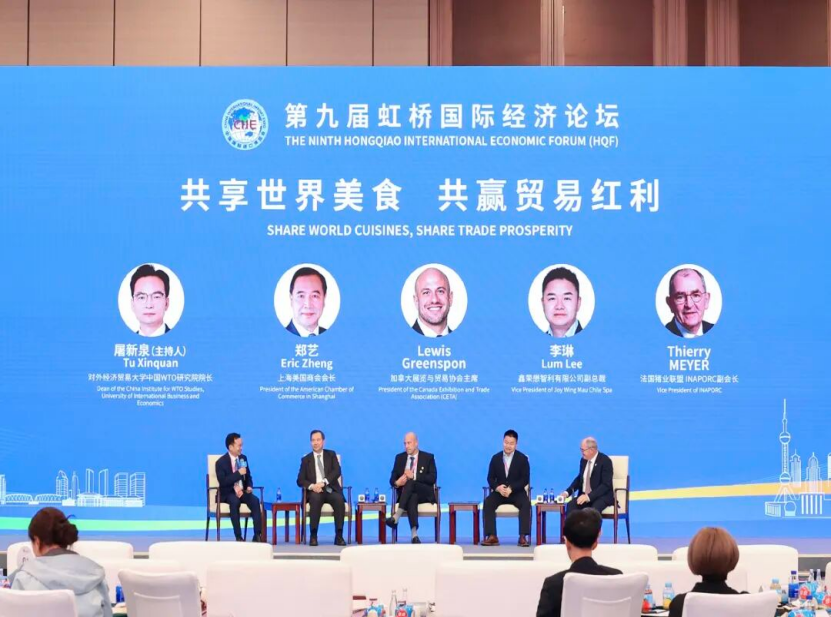
WTO Chairholder at UIBE Prof. Tu Xinquan chaired the roundtable entitled “Sharing Global Flavors and the Benefits of Trade.” Participants included Zheng Yi, President of the American Chamber of Commerce in Shanghai; Louis Greenspoon, Chairman of the Canadian Association of Exposition and Trade; Yu Jianbo, President of the New Zealand Cross-border Trade Promotion Association; Li Lin, Vice President of Joy Wing Mau Chile; and Meierte, Vice President of France’s pork industry association INAPORC. Using Canadian lobster, New Zealand dairy products, and French pork as examples, they explained how agricultural trade benefits both China and its partners.
The event also introduced the first episode of China Media Group’s documentary series “Global Flavors on Chinese Tables,” which shares its title with the session. The episode follows quality agri-food products from around the world on their journeys to Chinese households. It was broadcast on CCTV-17, the Agriculture and Rural Affairs Channel, on November 5.
Wang Xiaobin, Party Secretary of China Media Group’s Agriculture and Rural Affairs Programming Center, noted that this year marks the 25th anniversary of China’s WTO accession. Over those 25 years, high-standard opening-up has brought a growing range of quality international foods to Chinese tables. As a national agricultural broadcasting organization, the Center remains guided by General Secretary Xi Jinping’s congratulatory letter on the launch of the Agriculture and Rural Affairs Channel and his instructions encouraging journalists covering agriculture, rural areas, and farmers. Under China Media Group’s overall direction, the Center will strengthen the authority and distinctive role of the only agriculture-focused reporting platform within central media. It aims to document and connect cross-border agri-food trade, build bridges through communication, and help people around the world share the benefits of opening-up.