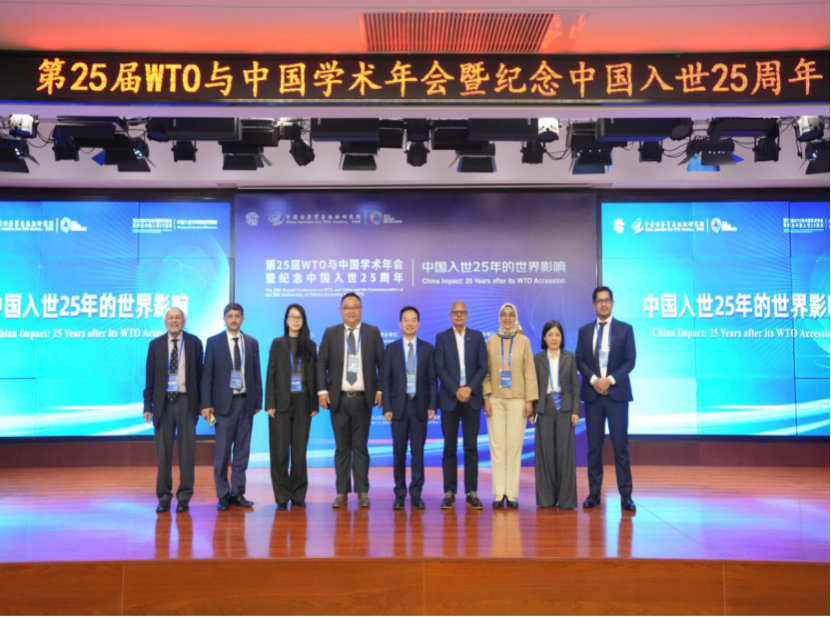
UIBE Hosts the 25th WTO and China Annual Conference commemorating the 25th anniversary for its WTO accession
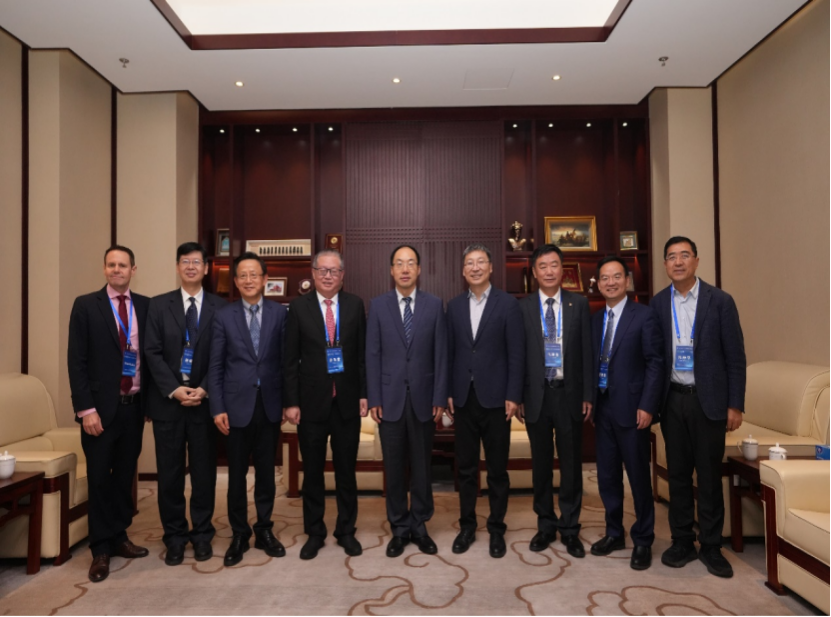
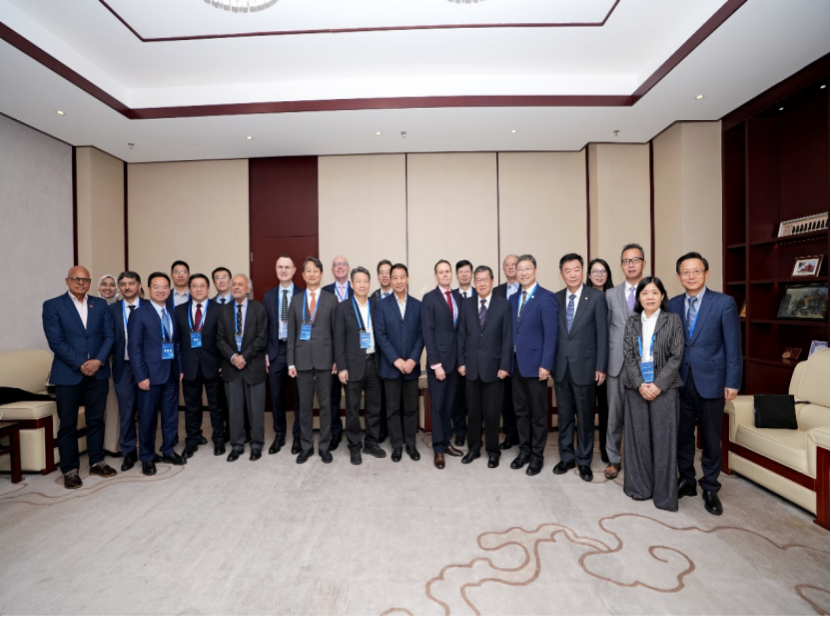
On November 11, co-organized by WTO Chair in Shanghai SUIBE, UIBE hosted the 25th WTO and China Academic Annual Conference, commemorating the 25th anniversary of China’s WTO accession. Nearly 200 participants attended, including Long Yongtu, former Vice Minister of Foreign Trade and Economic Cooperation and China’s Chief WTO Accession Negotiator; Yi Xiaozhun, former WTO Deputy Director-General and former Vice Minister of Commerce; and Long Guoqiang, Vice President of the Development Research Center of the State Council. Government representatives, scholars from universities and research institutes, members of WTO Chairs Programme institutions from several countries, business representatives, alumni, faculty, and students also took part. Professor Tu Xinquan, Dean of UIBE’s China Institute for WTO Studies, chaired the conference.
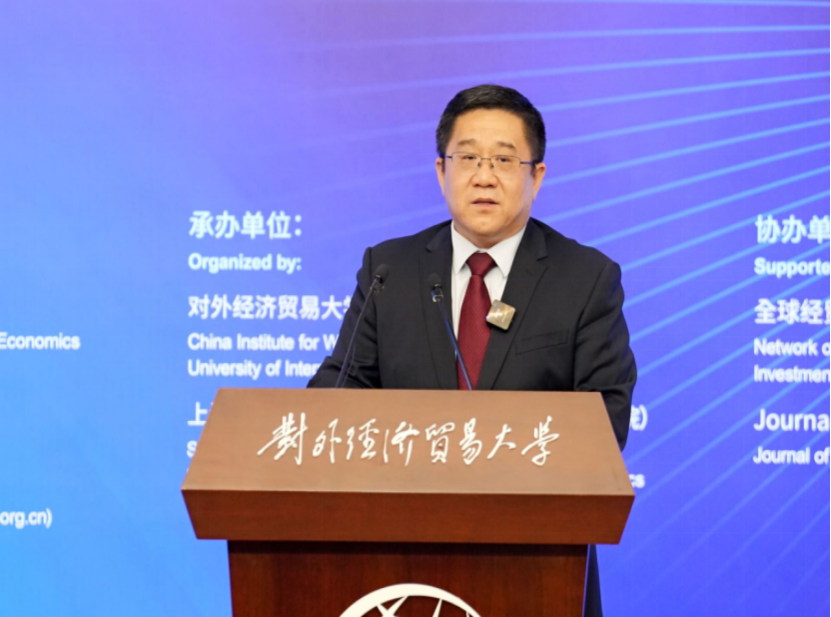
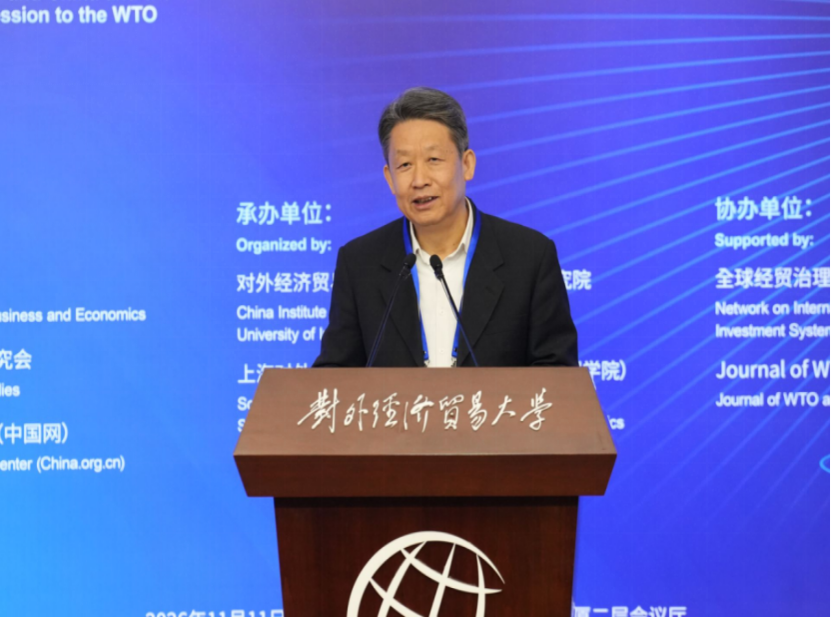
At the opening ceremony, WTO Chairholder at UIBE Professor Tu Xinquan warmly welcomed the guests. With the conference focused on the 25th anniversary of China’s WTO accession, he looked forward to exploring its many effects on China and the world and considering future pathways toward closer cooperation and harmonious coexistence.
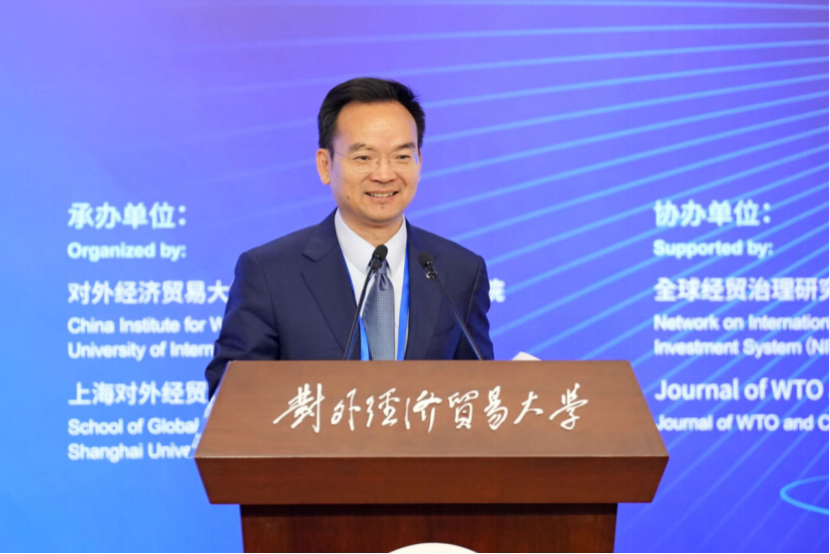
In his remarks, UIBE President Wu Weixing noted that, over the 25 years since joining the WTO, China has become deeply integrated into the multilateral trading system and steadily advanced reform and opening-up. Alongside its own development, it has created important opportunities for businesses worldwide to expand their markets and deepen the global division of labor. He called for a comprehensive understanding of the opportunities arising from China’s accession, joint efforts to maintain stable and predictable multilateral trade rules, and new ways for all WTO members to share the benefits of openness. UIBE, he said, will continue to support the China Institute for WTO Studies, strengthen research on the multilateral trading system, and train professionals with a sound understanding of international rules and a global outlook.
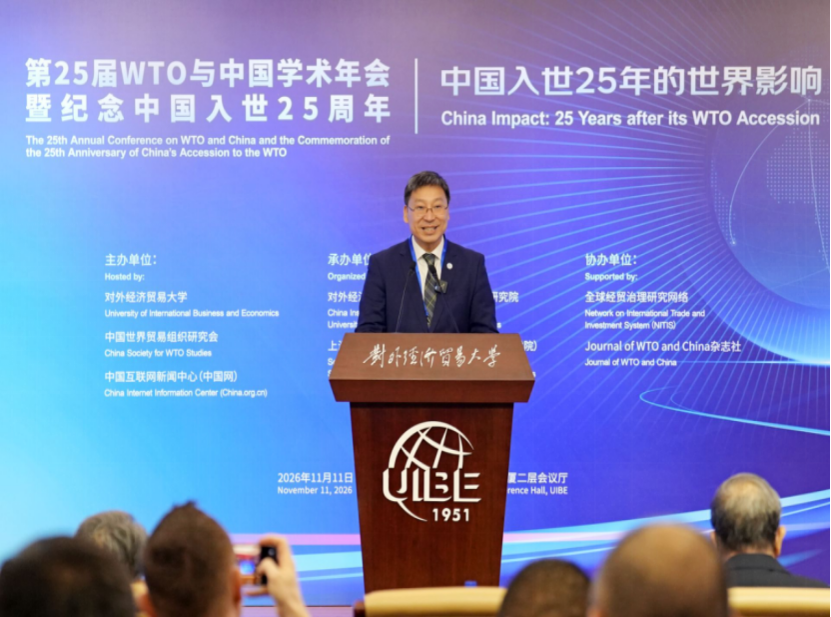
Ma Jianchun, President of the China Society for World Trade Organization Studies, described China’s 25 years in the WTO as a process of learning, using, and helping shape the rules. China, he said, is both a beneficiary and a committed defender and builder of the multilateral trading system. WTO reform should combine continuity with innovation, uphold non-discrimination, openness, transparency, and other core principles, and implement progress on rules for digital trade, green trade, and investment facilitation. Looking ahead, scholars and think tanks should deepen research on multilateral economic and trade rules, strengthen international exchanges and communication between government and business, and develop young professionals familiar with international rules and global affairs. These efforts would support China’s high-standard opening-up and better global economic governance.
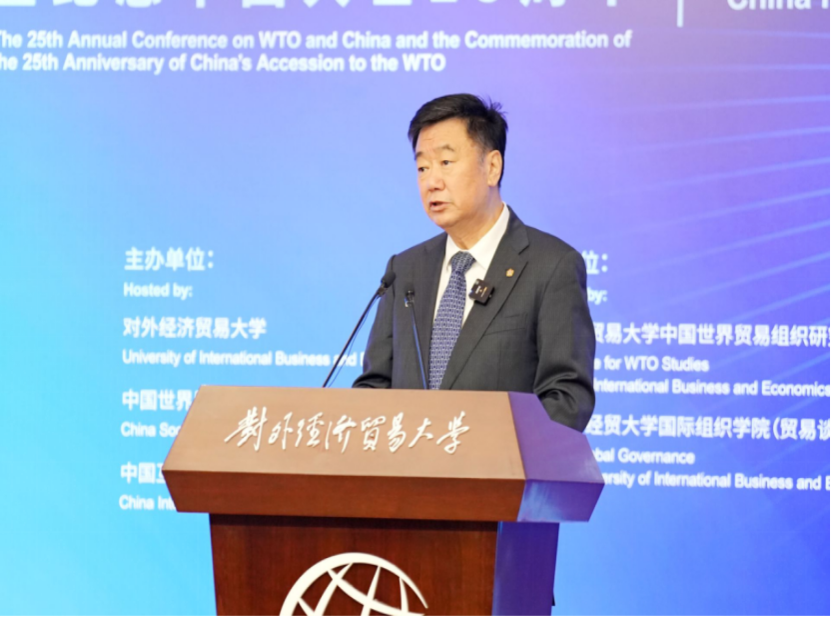
Han Yong, Director-General of the Ministry of Commerce’s Department of WTO Affairs, said that China’s WTO accession accelerated its own development while contributing to global growth and shared development opportunities. He called for economic and trade differences to be addressed within the WTO rules framework and for reform to focus on development, inclusion, and balance, building consensus through flexible and practical approaches.
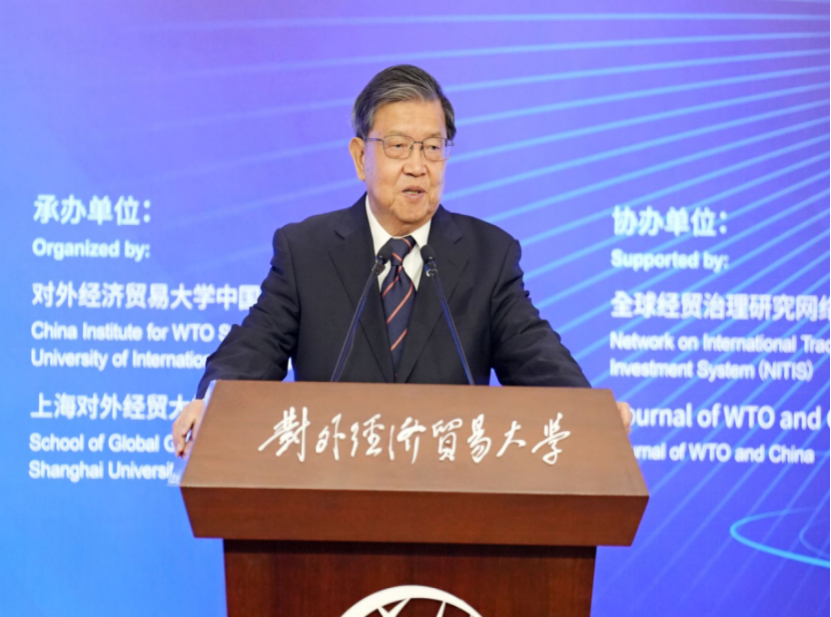
In the keynote session, Long Yongtu, former Vice Minister of Foreign Trade and Economic Cooperation and China’s Chief WTO Accession Negotiator, discussed institutional opening-up and mutual benefit as central elements of high-standard opening-up. He urged China to participate actively in shaping international rules, bring renewed vitality to multilateral institutions such as the WTO, and enable more countries, particularly those in the Global South, to share its development opportunities. High-standard opening-up, he argued, should support reform and high-quality development.
Long Guoqiang, Vice President of the Development Research Center of the State Council, argued that WTO accession had significantly advanced China’s open economic system, created a more open and stable external environment for its participation in the global division of labor, and brought vitality to the multilateral trading system. Commemorating the 25th anniversary, he said, requires both learning from experience and planning for the future. High-standard opening-up should deliver practical results, with careful judgment of strategy, pace, and intensity to maximize its contribution to high-quality development.
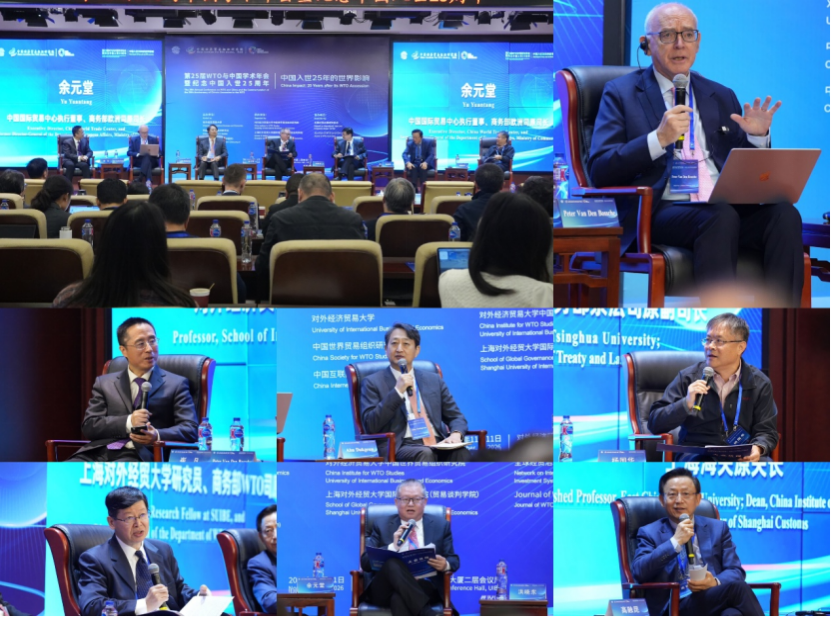
Professor Cui Fan of UIBE’s School of International Trade and Economics chaired a roundtable on “The Significance of China’s WTO Accession for China, the World and the WTO.” Peter van den Bossche, Distinguished Professor at Xi’an Jiaotong University and former Chair of the WTO Appellate Body, drew on China’s experience in WTO dispute settlement to examine its role in multilateral trade governance and emphasized the importance of an effectively functioning dispute settlement system.
Ahn Dukgeun, Professor at Seoul National University School of Law and former Minister of Trade, Industry and Energy of the Republic of Korea, reviewed how China’s WTO accession promoted domestic institutional reform and integration into global supply chains. He called for the multilateral trading system to be updated in response to changes in technology and the international trade environment.
Yu Yuantang, Executive Director of the China World Trade Center and former Director-General of the Ministry of Commerce’s Department of European Affairs, noted that China’s WTO accession advanced mutually beneficial China–EU economic and trade cooperation. Both sides, he said, should resolve differences through dialogue and consultation grounded in facts and WTO rules.
Hong Xiaodong, Professor at SUIBE and former Director-General of the Ministry of Commerce’s Department of WTO Affairs, said that China’s accession had profoundly affected its own development and that of the world economy. By expanding openness and deepening reform, China had stimulated market activity and contributed to maintaining and improving the multilateral trading system.
Gao Rongkun, Distinguished Professor at East China Normal University, Dean of the China Institute of Free Trade Strategy, and former Director-General of Shanghai Customs, reviewed China’s reform and opening-up before and after accession. He called for continued autonomous opening-up, firm support for multilateralism and free trade, and active participation in improving global economic and trade rules.
Professor Yang Guohua of Tsinghua University School of Law, former Deputy Director-General of the Ministry of Commerce’s Department of Treaty and Law, contrasted the metaphors “the wolf is coming” and “the ox is coming” to illustrate different domestic and international reactions to industrial competition. He called for an objective assessment of China’s contributions to development and a rules-based approach to managing competition and differences.
On the afternoon of November 11, participants held thematic discussions on “China and Developed Countries: Competition and Cooperation—Disruption or Integration?” and “China and Developing Countries: Positions and Choices in WTO Reform.”
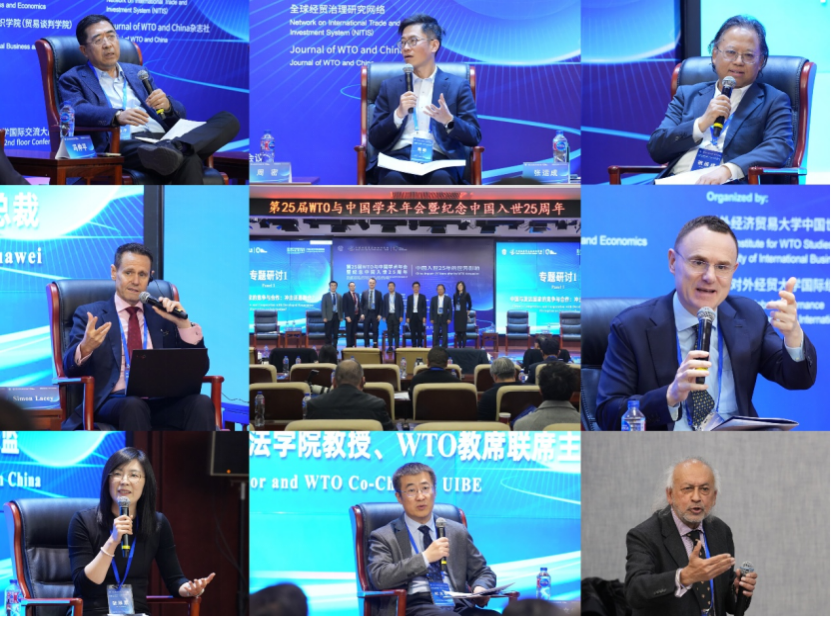
Professor Ji Wenhua of UIBE Law School, co-chair of UIBE’s WTO Chair, moderated the session on “China and Developed Countries: Competition and Cooperation—Disruption or Integration?” Simon Lacey, founder of Market Access X and former Vice President of Huawei, argued that integration remains the dominant direction of global economic and trade development, while trade frictions are concentrated in certain sensitive industries. He called for effective use of WTO rules to improve transparency and other aspects of governance, alongside attention to employment during industrial transitions.
Drawing on China–Switzerland free trade cooperation and Swiss firms’ operations in China, Professor Tomas Casas Klett of the University of St. Gallen argued that closer cooperation with China enables advanced economies to share market opportunities, acquire knowledge of innovation, and improve competitiveness. Disruption and integration can coexist, he noted, and open cooperation is an important response to competition.
Feng Zhongping, former Director of the CASS Institute of European Studies, emphasized the close economic and trade ties between China and the EU. Protectionism, he argued, cannot fundamentally improve competitiveness. Both sides should make full use of trade and investment consultation mechanisms and seek a dynamic balance through broader cooperation.
Zhou Mi, Professor at the Chinese Academy of International Trade and Economic Cooperation, examined changes in China’s relations with developed countries through economic size, industrial structure, trade rules, and technological development. He emphasized that disruption and integration are not mutually exclusive and called for adherence to basic multilateral trade principles and joint efforts to expand development opportunities.
Zhang Yuncheng, Deputy Secretary-General of the Academic Committee at the China Institutes of Contemporary International Relations, observed that strategic competition, joint responses to crises, and AI governance can all create opportunities to build consensus. He advocated turning strategic agreements into concrete action and gradually expanding the results of cooperation.
Zhang Weijia, Director of Government Affairs and Policy at the American Chamber of Commerce in China, drew on foreign-invested firms’ experience to explain how competition and cooperation, disruption and integration, coexist within businesses. Stable, transparent, and predictable policies, he said, are essential. Stronger policy communication and lower compliance costs across markets can deepen cooperation and make China–US economic and trade relations more resilient.
During the interactive discussion, speakers and audience members exchanged views on the sources of China’s competitiveness, outward investment and job creation, comprehensive approaches to China–EU trade differences, and reasonable limits on security measures. They emphasized open cooperation and coordination of rules as ways to manage differences and highlighted the WTO’s role in building consensus, stabilizing expectations, and promoting cooperation.
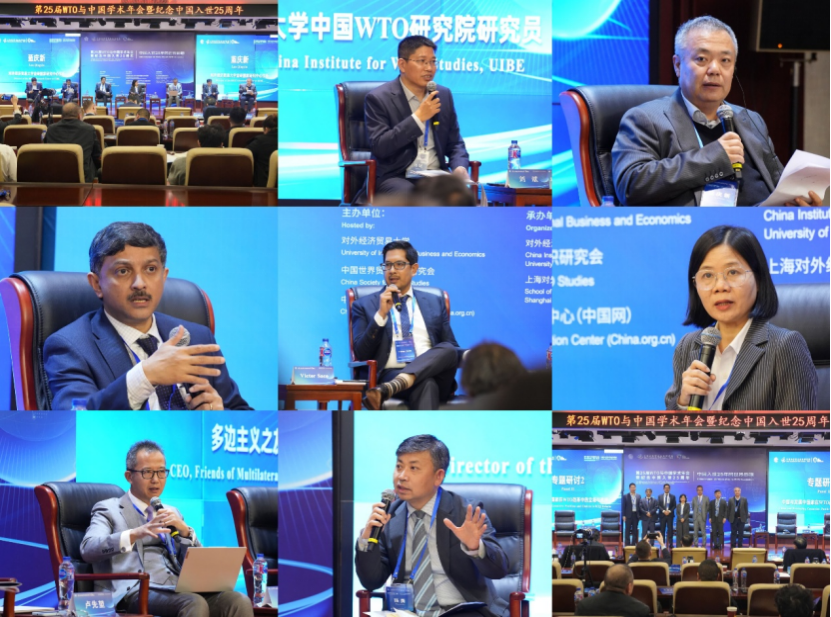
Liu Bin, Professor at UIBE’s China Institute for WTO Studies, chaired the session on “China and Developing Countries: Positions and Choices in WTO Reform.” James Nedumpara, Head of the Centre for Trade and Investment Law at the Indian Institute of Foreign Trade and WTO Chair in India, called for WTO reform to restore effective dispute settlement, uphold most-favored-nation treatment and non-discrimination, recognize differences in development levels, and protect special and differential treatment for developing members.
Victor Saco, Professor and Director of the Master’s Program in International Economic Law at the Pontifical Catholic University of Peru and WTO Chair in Peru, emphasized the importance of multilateral dispute settlement in protecting small and medium-sized economies. Drawing on China–Peru free trade cooperation, he called for deeper rules-based trade and investment cooperation to advance infrastructure, technological spillovers, and industrial development.
Trinh Thi Thu Huong, Vice Dean of the School of Economics and Public Management at Foreign Trade University and WTO Chair in Vietnam, said that reform should strengthen the WTO’s central role in the multilateral trading system, preserve necessary policy space for developing members, and expand technical assistance and capacity building. Discussions on digital trade, the green transition, and other emerging issues should be more transparent, inclusive, and development-oriented.
Lu Xiankun, President of Friends of Multilateralism, analyzed major WTO members’ reform positions and current challenges. He urged patience given the complexity of comprehensive reform and advocated flexible, practical progress on specific issues. China, he said, should communicate and cooperate more closely with all members to help maintain the system’s stability and advance reform.
Zhang Yong, Head of the Economics Department at the CASS Institute of Latin American Studies, discussed Latin American economies’ concerns about agricultural reform, dispute settlement, and emerging trade issues in light of their development characteristics. He called on China to uphold multilateral trade through high-standard opening-up, contribute reform proposals, build development consensus across the Global South, and improve the quality and effectiveness of China–Latin America cooperation.
Lan Qingxin, Vice Dean of UIBE’s School of International Trade and Economics and Director of its BRICS Research Center, argued that WTO reform should respond to changes in the global economy and industrial activity by advancing coordinated reforms in development, fair competition, decision-making, and dispute settlement. China, he said, should help stabilize the multilateral trading system, provide reform proposals, and bridge members at different development stages. Institutional opening-up and the provision of public goods would contribute to better global economic and trade governance.
Professor Ying Pinguang, Dean of SUIBE’s School of International Organizations (School of Trade Negotiations), chaired the closing session. He noted that the meeting had strengthened connections among WTO Chairs and created opportunities to exchange views, build consensus, and participate jointly in reforming and developing the multilateral trading system. He encouraged participants to use the Chairs platform to deepen cooperation in joint research, curriculum development, and outreach, supporting multilateral trade through practical action.
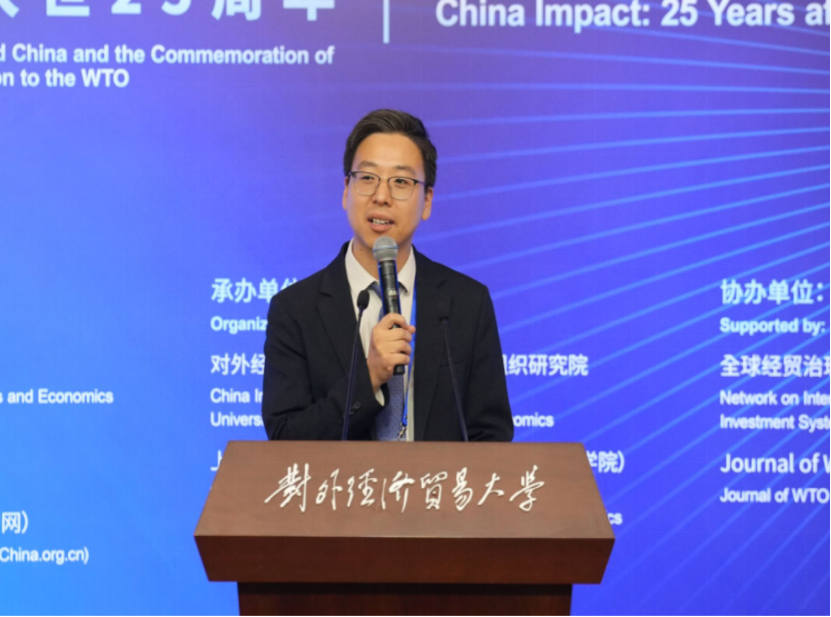
In his closing remarks, Yu Yunquan, Vice President of China International Communications Group and Party Secretary and President of China.org.cn, said that China had observed WTO rules and honored its commitments throughout its 25 years of membership. Opening-up had supported reform and development and brought mutual benefits to China and the world. China, he stressed, remains committed to high-standard opening-up, a WTO-centered multilateral trading system, and shared development across the Global South. China International Communications Group will strengthen exchanges with scholars and think tanks in China and abroad, create diverse dialogue platforms, encourage the practical use of research findings, and undertake joint thematic studies. These efforts aim to improve mutual understanding and trust, expand global knowledge sharing on trade and development, and contribute to healthy and stable global growth.
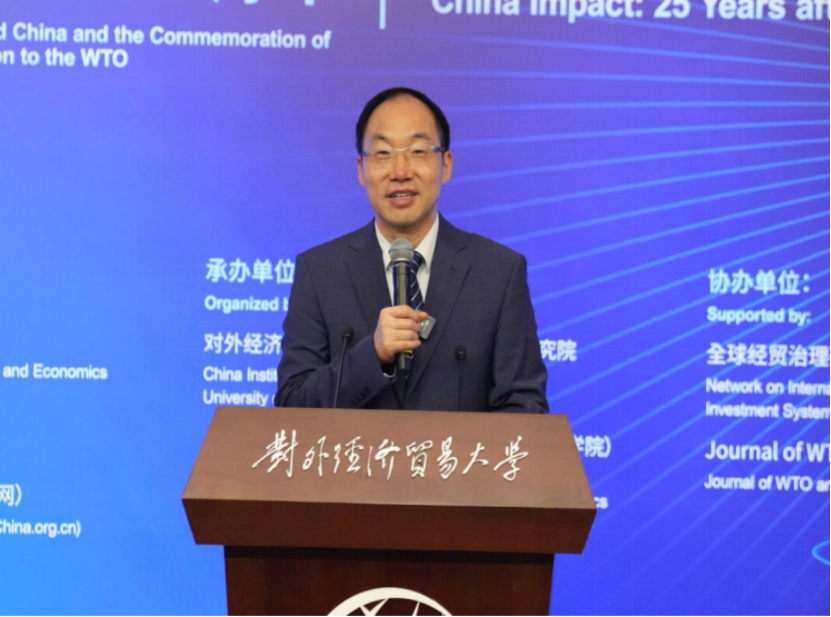
The conference was jointly hosted by UIBE, the China Society for World Trade Organization Studies, and the China Internet Information Center (China.org.cn). It was jointly organized by the two Chinese WTO Chairs institutions, UIBE’s China Institute for WTO Studies and SUIBE’s School of International Organizations (School of Trade Negotiations), with support from the Global Economic and Trade Governance Research Network (NITIS) and the Journal of WTO and China. Since the Institute’s establishment, the WTO and China Academic Annual Conference has been held successfully 25 times. It has become an important platform for Chinese and international experts to discuss the WTO and the multilateral trading system, offering fresh perspectives and current insights for policymaking and academic research.