

Prof. Tu Xinquan Attended the 8th Asia-Pacific Regional Cooperation Academic Seminar

On September 20, the "8th Asia-Pacific Regional Cooperation and High-Quality Development Forum of Academic Journals" was successfully held at Jilin University. Co-hosted by China Renmin University's Newspaper and Periodical Information Center, Fujian Academy of Social Sciences, Jilin University's Northeast Asian Studies College, and Jilin University's Northeast Asian Research Center, the forum was jointly organized by the editorial departments of Asia-Pacific Economic Review and Northeast Asia Forum. Approximately 70 experts and scholars from over 20 universities and research institutions (including the Chinese Academy of Social Sciences and China Institute of International Studies) and more than 20 journal units (including Contemporary Asia-Pacific Studies and World Economy and Politics Forum) participated in the event. Wu Zhaoguang, Member of the Party Leadership Group and Vice President of Fujian Academy of Social Sciences, Li Hongyu, Secretary of the Party Committee of China Renmin University's Newspaper and Periodical Information Center, and Wang Xiwei, Vice President of the Academy of Social Sciences of Jilin University, attended and delivered speeches. The opening ceremony was hosted by Wu Hao, Dean of Jilin University's Northeast Asian Studies College and Northeast Asia College.
In his speech, Vice President Wu Zhaoguang pointed out that Fujian Academy of Social Sciences focuses on major issues concerning Fujian's reform and opening-up as well as economic and social development, has built characteristic disciplines and key research directions represented by studies on "Taiwan, overseas Chinese, and maritime affairs," and has achieved a series of theoretical and applied results with Fujian characteristics. He stated that Fujian Academy of Social Sciences will form research teams around key topics such as the Belt and Road Initiative, the construction of free trade pilot zones, and maritime economic cooperation, conduct in-depth and systematic research, actively serve the national overall strategy of opening-up, and provide strong theoretical support and intellectual assistance for expanding high-level opening-up.
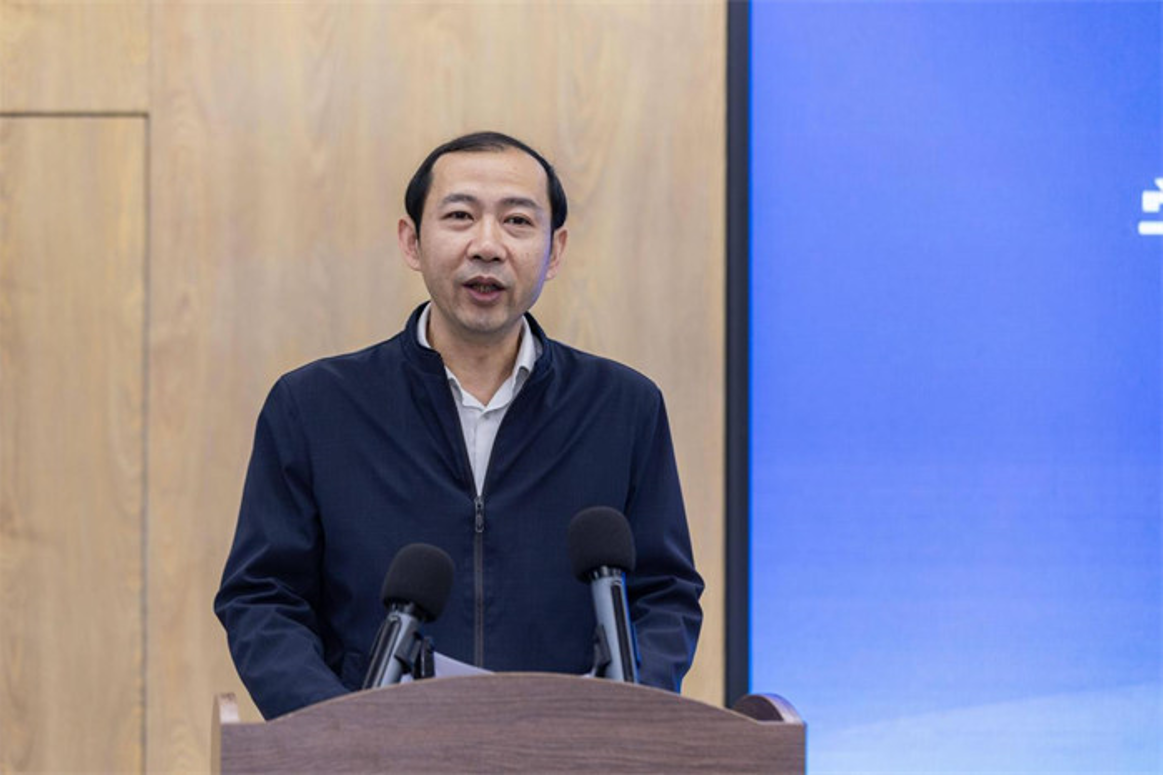
In the keynote speech session, Researcher Li Xiangyang (Member of the Academic Division of the Chinese Academy of Social Sciences and Dean of the Institute of Asia-Pacific and Global Strategy), WTO Chairholder at UIBE Prof. Tu Xinquan, Researcher Zhao Beiwen (Deputy Director of the Institute of World Economy at Shanghai Academy of Social Sciences and Editor-in-Chief of World Economy Studies), Prof. Wang Qin (Former Director of the Center for Southeast Asian Studies at Xiamen University), and Prof. Ba Dianjun (Deputy Director of Jilin University's Northeast Asian Research Center) delivered wonderful reports on topics including "Promoting the High-Quality Development of the Belt and Road Initiative through Institutionalization," "Trump 2.0 Trade Policy and the Future of the Multilateral Trading System," "Chinese-Style Modernization and High-Level Institutional Opening-Up," "The Expected Impact of U.S. 'Reciprocal Tariffs' on ASEAN Economic Growth," and "The Changing Trends of the International Order Amid the Return of New Geopolitics."
The conference also set up two parallel forums: "The Evolution of the International Order and Asia-Pacific Regional Economic Cooperation" and "Innovative Development of Journals." Participating experts and scholars conducted in-depth exchanges and ideological collisions around topics such as Asia-Pacific regional cooperation, international order transformation, Asia-Pacific digital order, and East Asian economic development paradigms; journals held enthusiastic discussions on editorial experience, topic selection directions, journal workshops, and the impact of artificial intelligence, achieving good results of mutual learning and mutual promotion. In the dialogue session between journals and scholars, all parties held heated discussions on topics such as promoting the high-quality development of academic journals and strengthening the coordinated development of scholars and journals.