

"The Impact of Trump 2.0 on the Multilateral Trading System" Thematic Seminar Successfully Held
On the afternoon of April 14, 2025, the "The Impact of Trump 2.0 on the Multilateral Trading System" Thematic Seminar was held at the University of International Business and Economics (UIBE), Beijing. Co-organized by The China Institute of WTO studies (CIWTO) of UIBE and the Geneva Laker Center, the seminar focused on the core theme of "The Impact of Trump 2.0 on the Multilateral Trading System".
It was hosted by Professor Tu Xinquan, Dean of CIWTO and Chairholder of the WTO Chairs Programme (WCP) at UIBE. Distinguished guests including Lu Xiankun (Director of the Geneva Laker Center, Switzerland), Gao Rongkun (Dean of the China Free Trade Strategy Research Institute, East China Normal University), Huang Rengang (Vice President of the China Society for World Trade Organization Studies), Wei Hongxia (Researcher at the Academy of Contemporary China and World Studies), Shan Ming (Vice Minister of the International Cooperation Department, China Council for the Promotion of International Trade - CCPIT), Jiang Zheren (Deputy Director of the Third Division of International Organizations, International Cooperation Department, CCPIT), Hong Xiaodong (China Society for World Trade Organization Studies), Liu Bin (Researcher and Vice Dean of the School of Government Management, UIBE), and Ding Ru (Associate Professor, China University of Political Science and Law) conducted in-depth discussions on issues such as the impact of U.S. trade policies and WTO reform.
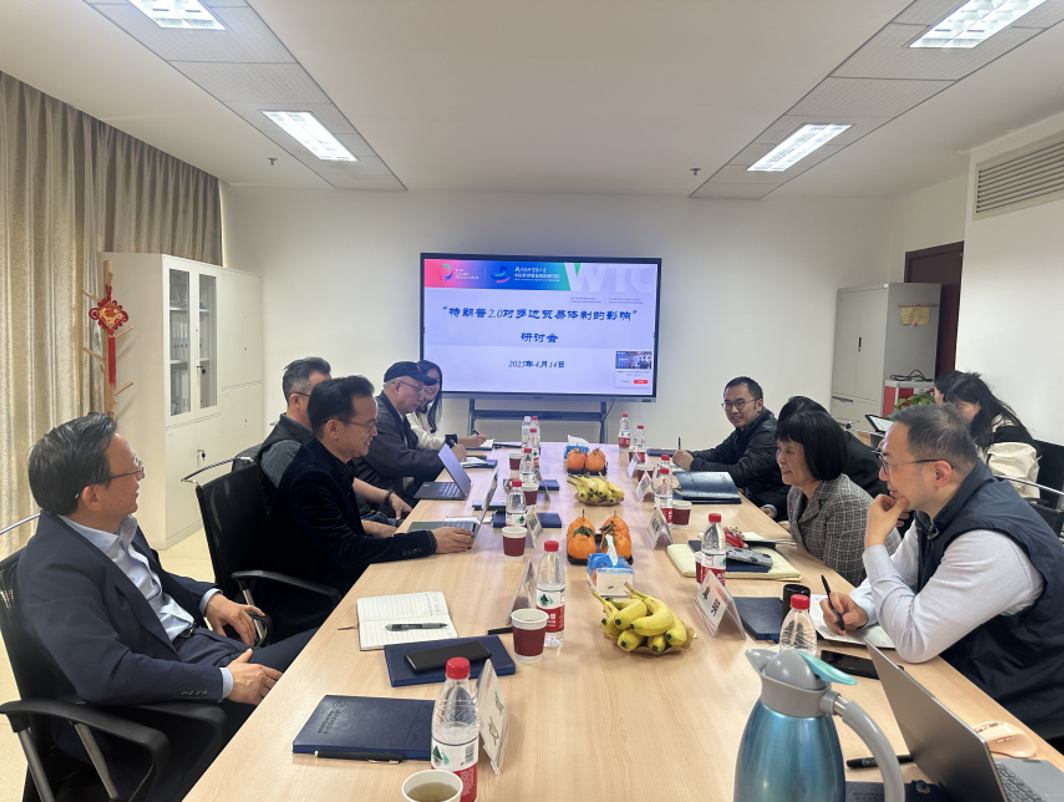
The meeting pointed out that the global trade is currently undergoing structural adjustments. The lingering impacts of U.S. unilateralist policies continue to emerge, with its trade protectionist measures imposing significant trade diversion pressure on major economies such as Canada and the European Union, and posing challenges to the stability of global industrial chains. Although the U.S. has not formally withdrawn from the WTO, its passive participation in multilateral mechanisms has weakened the binding force of international trade rules, and how to effectively address this issue has become a focal topic.
Regarding China-U.S. economic and trade relations, participating experts suggested adopting a strategy combining unilateral opening-up and multilateral cooperation. They emphasized the need to accurately assess U.S. policy trends, stabilize bilateral trade relations, and diversify risks through regional cooperation mechanisms such as RCEP expansion. Experts also put forward innovative proposals, advocating the use of plurilateral agreements to advance the WTO reform process, launching pilot projects first in areas such as e-commerce and environmental goods, while promoting the construction of the Asian Economic Community. In addition, the meeting recommended deepening China-EU supply chain cooperation, creating a demonstration effect through unilateral tariff reductions, and strengthening standard coordination in emerging industries.
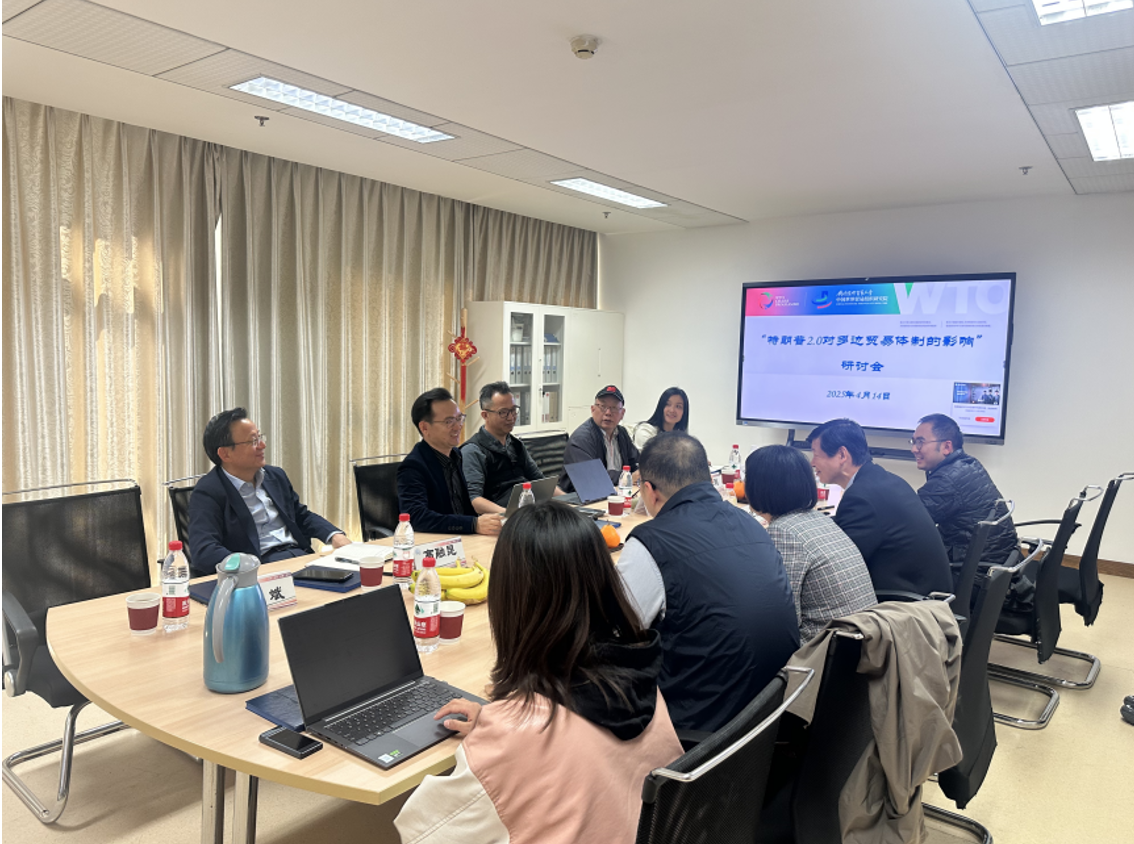
The thematic seminar lasted three hours. Experts and scholars in attendance conducted in-depth discussions on the impact of Trump 2.0 on the multilateral trading system, and the seminar achieved complete success.