

WTO Chair at UIBE Successfully Hosts workshop on Trade and Environment: Revitalizing WTO’s functions by addressing contemporary trade issues
On May 20, 2025, on the eve of the 32nd APEC Ministers Responsible for Trade Meeting, the workshop on trade and environment: Revitalizing WTO’s functions by addressing contemporary trade issues was successfully convened in Suzhou, China, as a supporting event to the APEC Trade Ministers' Meeting.
The workshop was hosted by the Ministry of Commerce of the People's Republic of China (MOFCOM) and organized by the WTO Chair at University of International Business and Economics (UIBE), drawing over 200 participants including senior officials from APEC economies, as well as representatives from academia, industry, and research institutions across both domestic and international communities.
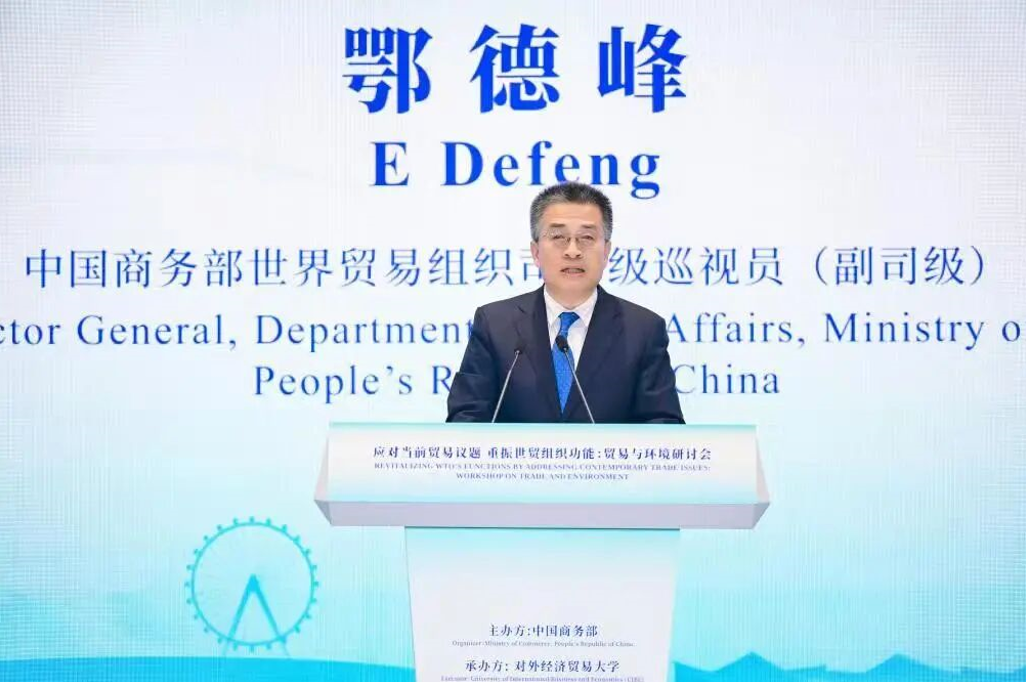
E Defeng, Second-Level Inspector (Deputy Director-General level) of the WTO Department of MOFCOM, attended the workshop and delivered opening remarks. He underscored that trade and the environment has become critical issues in global economic and trade governance, and that the Chinese government attaches great importance to this nexus. Confronted with the multiple challenges of global green transition, unilateralism, and protectionism, he called on all parties to strengthen policy coordination, uphold the multilateral trading system with the WTO at its core, and facilitate the free flow of green technologies, products, and services.
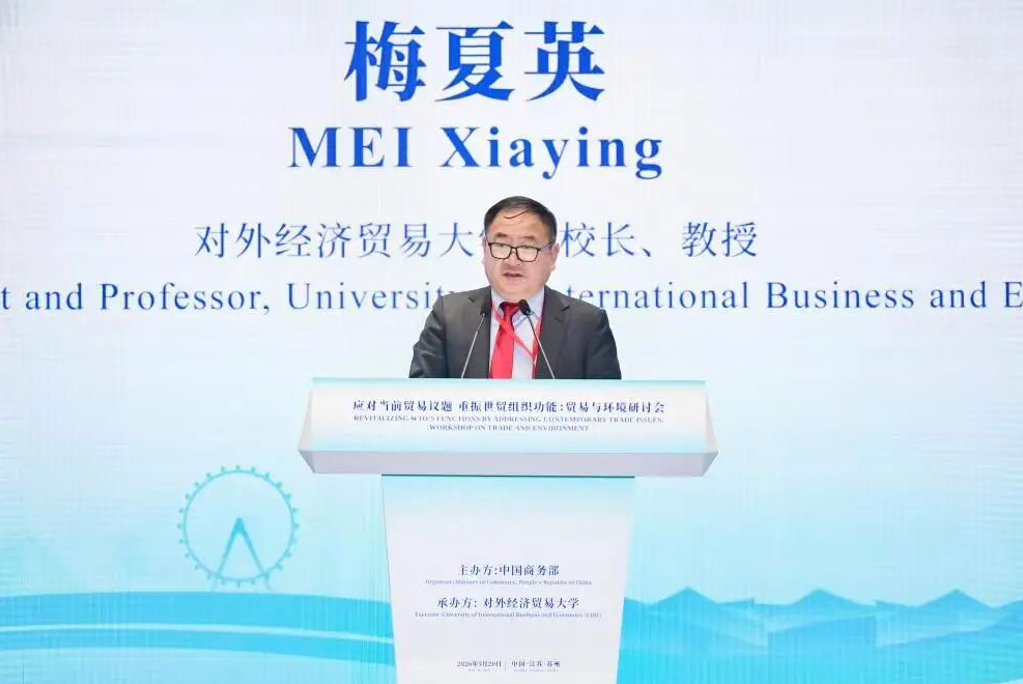
Professor MEI Xiaying, Vice President of UIBE, delivered welcoming remarks on behalf of the University. He extended a warm welcome to the distinguished guests from China and abroad, and presented UIBE's research strengths and achievements in the fields of international economic and trade governance, WTO rules, foreign-related rule of law, green trade, and low-carbon economy. Professor Mei affirmed that UIBE will continue to leverage its disciplinary, talent, and platform advantages to actively serve China's high-level opening-up and the study of international economic and trade rules.
Senior officials from APEC economies, experts from international think tanks, scholars from China and abroad, and industry representatives engaged in in-depth exchanges on themes including good practices in trade-driven green transition and development, current challenges, and how to better support the work of the WTO through APEC cooperation.
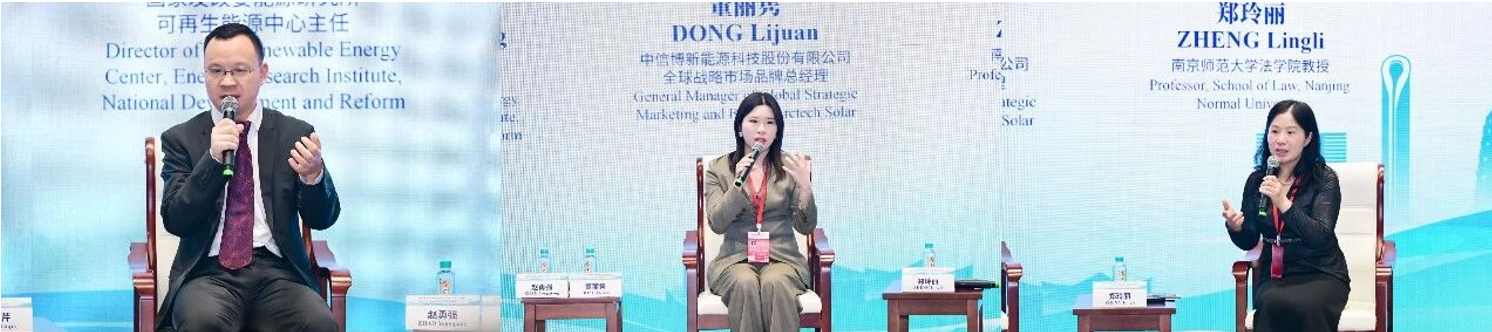
Session I focused on "Global Trade Green Transition: Seeking a Path of Green and Sustainable Development Amidst Multiple Challenges." ZHAO Yongqiang, Director of the Renewable Energy Center of the Energy Research Institute of the National Development and Reform Commission (NDRC), and DONG Lijun, General Manager of Global Strategic Marketing at Arctech Solar (CITIC Bo New Energy Technology Co., Ltd.), delivered keynote presentations. Participants engaged in discussions on renewable energy development, green and low-carbon industry practices, green product trade, and standards coordination, sharing experiences in technological innovation, industrial chain cooperation, and regulatory coordination in the green transition.
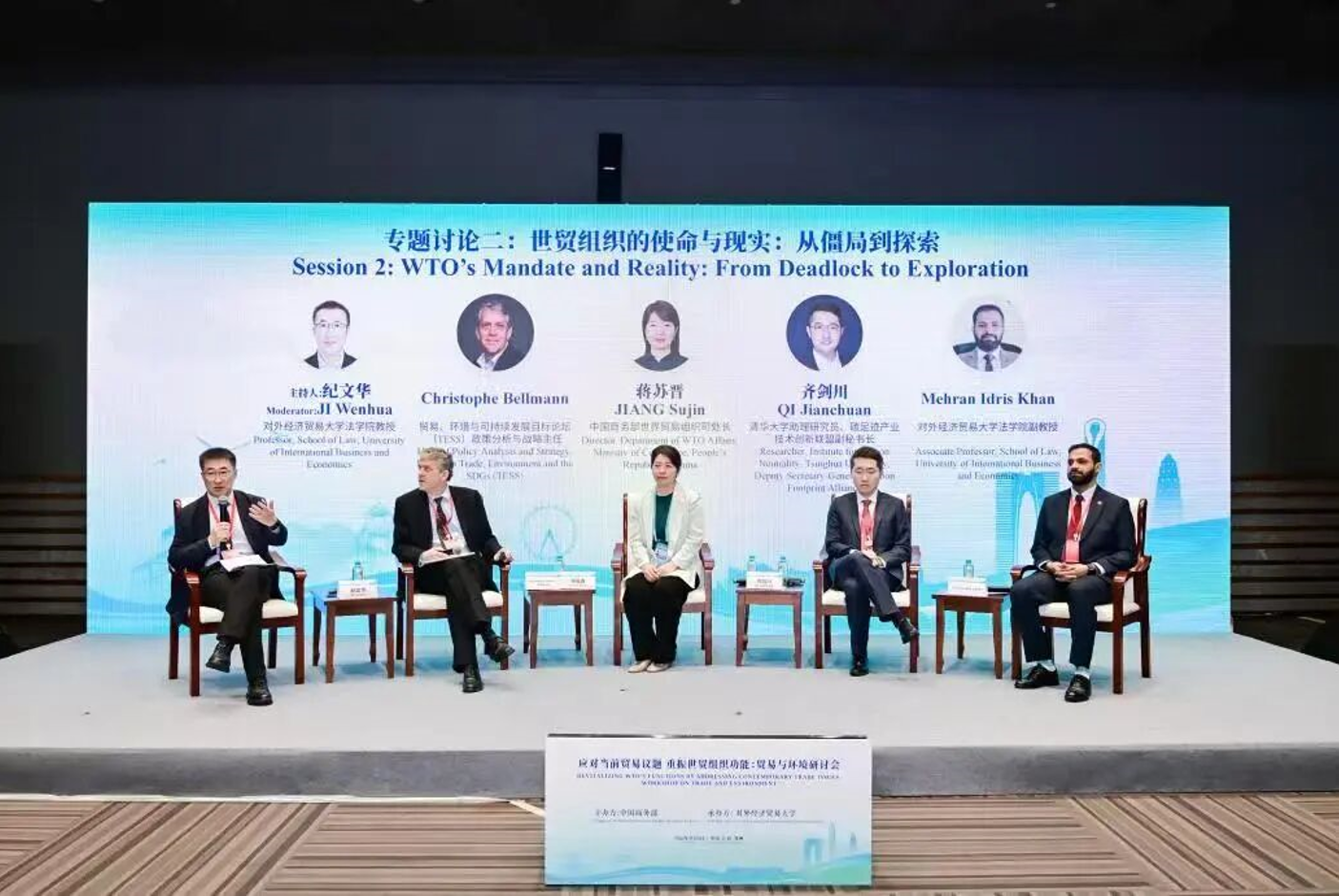
Session II focused on "The Mission and Reality of the WTO: From Stalemate to Exploration." Presentations were delivered by Christophe Bellmann, Director of Policy Analysis and Strategy at the Geneva Trade, Environment and Sustainable Development Goals Forum (TESS); JIANG Sujin, Director of the WTO Department of MOFCOM; ZHENG Lingli, Professor at Nanjing Normal University Law School; QI Jianchuan, Assistant Research Fellow at Tsinghua University and Deputy Secretary-General of the Carbon Footprint Industry Technology Innovation Alliance; and JI Wenhua, Associate Professor at the UIBE Law School. Discussions centered on trade and sustainable development agendas, trade-related climate measures, carbon footprint accounting and mutual recognition of standards, and the implications of regional cooperation experiences for WTO reform. Participants highlighted the need to enhance regulatory transparency, standards interoperability, and developmental inclusiveness in the green transition, cautioning against the risk of green policies evolving into new trade barriers.
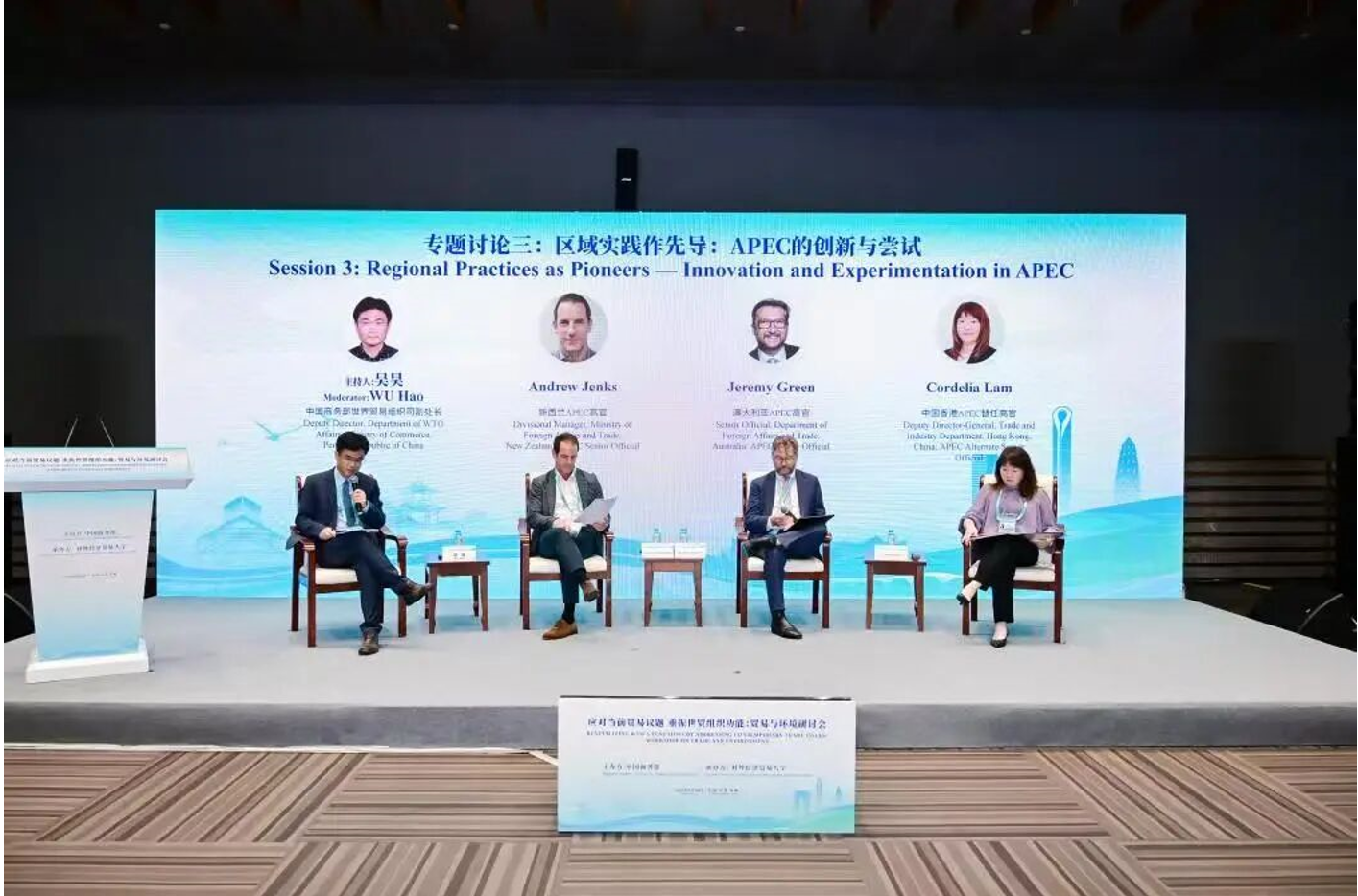
Session III focused on "Regional Practices as a Pilot: APEC's Innovation and Experimentation." WU Hao, Deputy Director of the WTO Department of MOFCOM, and Cordelia Lam, APEC Alternate Senior Official from Hong Kong, China, led the discussions. Participants exchanged views on practical issues including environmental goods and services lists, green finance, and low-carbon trade policy coordination. They recognized that APEC, as an ideas incubator and policy experimentation platform, can provide regional experience for WTO-related discussions and the improvement of multilateral trade rules through voluntary, non-binding, pragmatic, and incremental cooperation.
E Defeng delivered the concluding remarks. He noted that the workshop had conducted comprehensive and in-depth exchanges on topics including global trade green transition, the mission and reality of the WTO, and APEC innovation practices. The event further consolidated consensus among all parties on strengthening multilateral coordination, promoting green trade, and upholding the multilateral trading system, marking a successful conclusion. He emphasized that all parties should enhance the synergy between the WTO, APEC, and other multilateral platforms, promote coordination of green trade rules, prevent rule fragmentation and the emergence of new trade barriers, assist developing members in better adapting to the green transition, and jointly inject stability and certainty into Asia-Pacific cooperation and global economic and trade development.
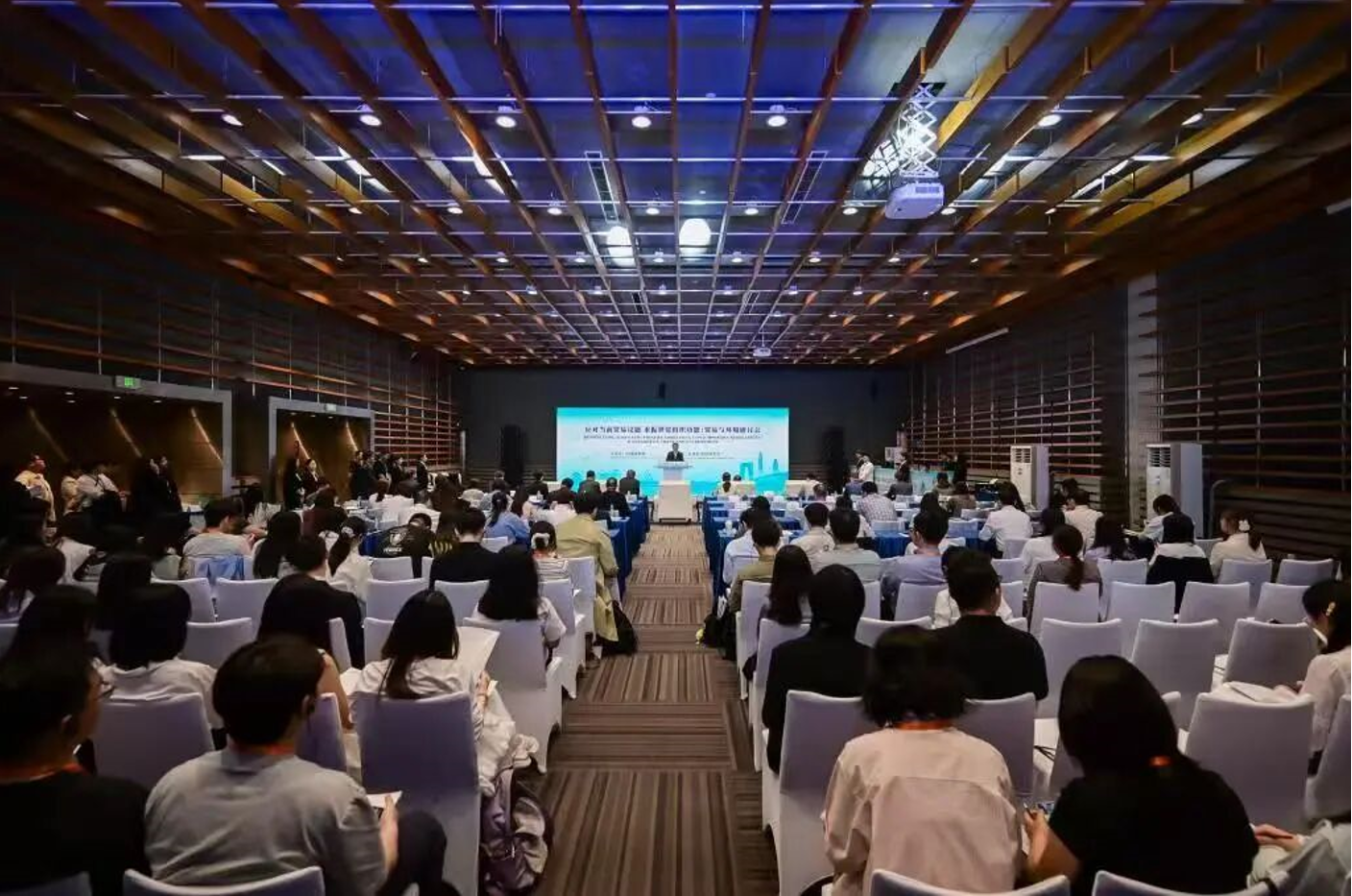
The organization of this workshop was jointly undertaken by the WTO Chair at UIBE, the Academy of Foreign-Related Rule of Law, and the National Institute of Opening-Up at UIBE. WTO Co-Chair at UIBE, Professor JI Wenhua led the academic team in deep engagement with conference preparation and academic organization, fully demonstrating UIBE's academic strengths and influence in the fields of foreign-related rule of law, international economic law, and global economic and trade governance research. Building on this success, UIBE will continue to leverage its professional expertise to deepen research on key topics including WTO reform, trade and environment rule coordination, and green trade governance, contributing academic strength to China's efforts in advancing high-level opening-up and building a foreign-related legal system.