


联系电话:86-10-64495778 传真:86-10-64495779
E-mail:ciwto@uibe.edu.cn

2018-11-21
11月16日,中国WTO院兼职教授卢先堃应邀参加了法国经济财政部在巴黎举行的有关WTO改革的国际研讨会,会议主题为“契合21世纪的WTO:需如何改革?” 法国经济和财政部长Bruno Le Maire、WTO总干事阿泽维多、欧盟贸易委员Cecilia Malmström与会并分别做了主旨发言。
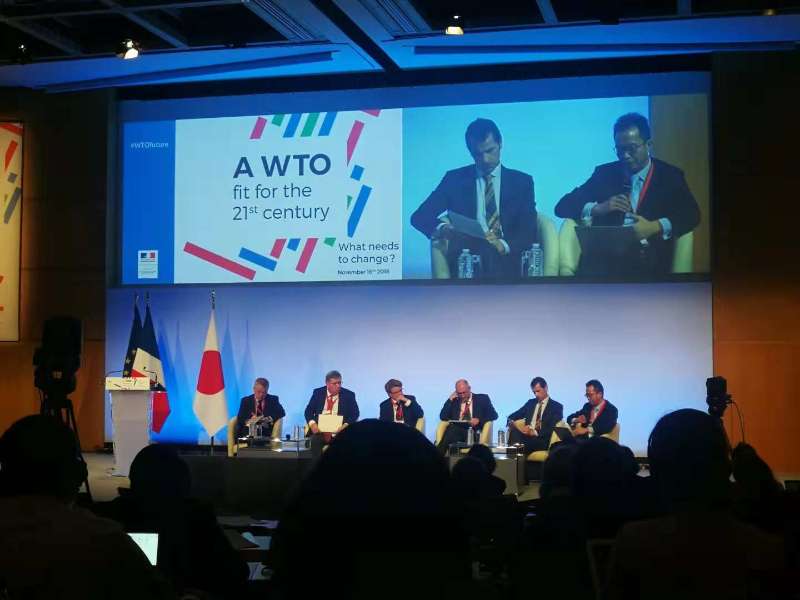
卢教授作为发言嘉宾参加了由《金融时报》记者Alan Beattie主持的有关扭曲性补贴及其反制措施的WTO规则的小组讨论,其他与会嘉宾包括瑞士圣加仑大学教授Simon Evenett、法国世界经济研究所(CEPII)主任Sébastien Jean、欧委会贸易总司司长Denis Redonnet、欧洲钢铁协会秘书长Axel Eggert。
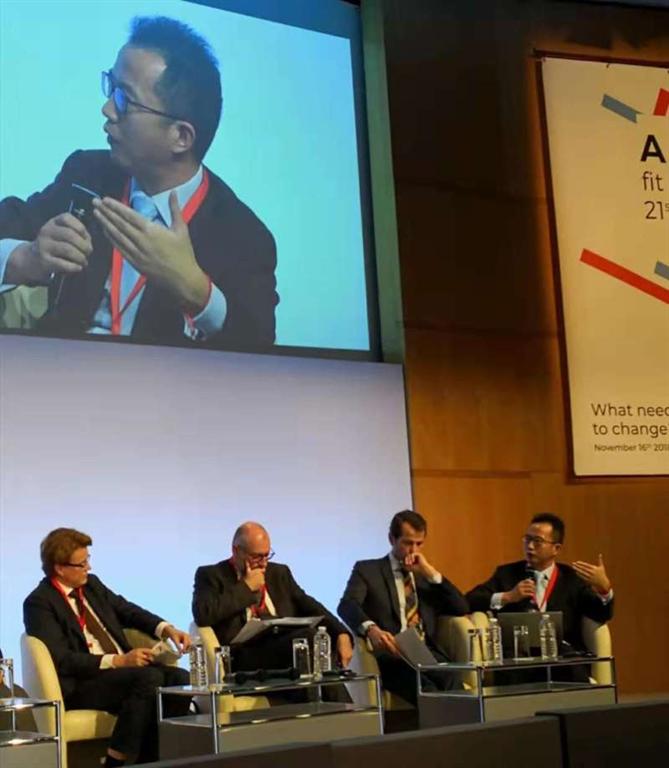
卢教授发言时全面分析了WTO有关工业品补贴谈判的各方观点以及发达国家提供工业品补贴和农产品补贴方面的历史和现实情况,敦促全面、客观地看待补贴问题,不能将矛头故意导向中国一家,“只见树木、不见森林”。
卢教授发言稿全文请见:https://www.linkedin.com/feed/update/urn:li:linkedInArticle:6469905290358853632/
全文内容:
Don’t Lose Sight of the Forestry While Looking at a Tree
Speech at Paris Conference
“A WTO Fit for the 21st Century: What Needs to Change?”
16th November 2018, Paris, France
Let me stick to the two questions by our moderator Mr. Alan Beatie (FT jounalist), which I believe are important to set up the context for our discussion:
· Whether the current WTO rules on subsidies need updating;
· How they could be used better.
On the first question, I think the answer was given long time ago when Members begun to discuss the launch of the DDA negotiations. Subsidies featured as an important part of the Doha Rules Negotiations since 2001. The concerns behind, at that moment, were about the enormous amounts of subsidies by the rich, i.e. developed countries, mainly Japan, US and EU. The Doha mandate states that the rules negotiations should “clarify and improve” subsidy disciplines while preserving the basic concepts and principles of the Subsidy and Countervailing Measures (SCM) agreement and taking into account the needs of developing and least-developed participants.
Members have high concern on subsidies and countervailing measures that are taken to offset impact of distortive subsidies. The proof of that is that SCM-related disputes ranking high since the inception of the multilateral dispute settlement system. Up to now, 121 cases cite SCM agreement in the request for consultations, mostly involving major players. US accounts for about 35% (42 cases), EU about 19% (23), China about 13% of all cases. (China joined the WTO later, so this lower percentage does not diminish the high concerns of other Members on its related practices.)
On the second question, i.e. how they could be used better, different Members may have different views.
Some attach more importance to subsidies and, according to some statistics, there exist a serious number of subsidies in various sectors and associated market distortion.
Some care more about the protectionist abuse of countervailing measures, of which China for decades ranks world No.1 target of.
Some feels bad about lack of transparency and required notifications. SCM Committee Chair last October reported that 78 WTO members (out of 164) have not yet made their new and full subsidy notifications that were due in 2017, 63 members have not made the notifications due in 2015 and 56 members have still to deliver their notifications due in 2013.
And, all these aspects have been discussed for long in Doha Rule negotiations. So Members need to decide where to pick up, to further discuss and hopefully to reach agreement.
On the other hand, there are two things worth pointing out:
First is that industrial policies are not only used by developing countries, nor is industrial subsidy only used by China, who are actually late comers. You heard from Professor Simon Evenett (St. Gallen University of Switzerland) about what has happened in the past and what is happening now in various sectors, including by big developed countries including the US and EU, such as for new energy automobiles. You can also find interesting information in the report by Christian Stensrud in October 2016 titled “Industrial Policy in the United States”. For example, US federal government lavishly spent 65 billion USD just to bail out Chrysler and General Motors.
Second is that industrial subsidy is not the only form of market-distortive subsidies within the WTO.
浏览次数: